The following is a guest post and analysis from Vincent Maliepaard, Marketing Director at Sentora.

Stablecoins have become a meaningful settlement layer, lending markets continue to expand, and tokenized real-world assets keep growing. Visa said global stablecoin transaction volume rose from more than $3.5 trillion in 2023 to more than $5.5 trillion in 2024. That is not the profile of a niche experiment. It is the profile of infrastructure finding real demand.
The problem is that DeFi still measures itself with a bootstrap metric.
TVL is a misaligned scoreboard
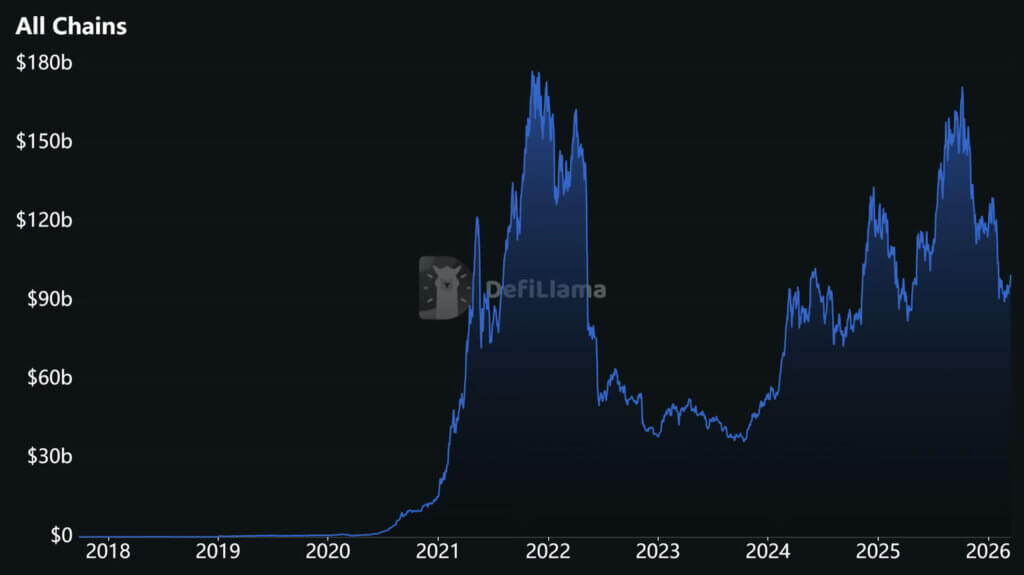
For most of the last cycle, Total Value Locked became the default scoreboard. TVL was useful early because it was simple. It showed that users were willing to move capital onchain. It helped the market track adoption during a phase when the main question was whether people would trust decentralized infrastructure at all. But once the goal shifts from growth to durability, TVL starts to hide as much as it reveals. It measures how much capital entered a protocol, not how well that capital is protected once it gets there.
That distinction matters because exposure is not the same thing as strength.
A protocol can have hundreds of millions in deposits and still be structurally fragile. If those deposits sit on top of weak dependencies, poor oracle design, concentrated governance, or limited safeguards, high TVL does not make the system robust. It simply means more capital is exposed. In that sense, TVL is closer to a gross measure of activity than a true measure of value. It tells you where capital is sitting. It does not tell you whether that capital is secure.
The market has already seen what that looks like in practice.
When a major protocol is exploited, TVL can collapse almost immediately because the number was never measuring defended capital in the first place. Ronin’s TVL fell from roughly $1.2 billion before its 2022 bridge exploit to about $15 million today, according to DeFiLlama data.
These are not edge cases. They show that deposits alone do not create trust and value. A large balance can disappear very quickly when the market realizes the protection underneath it was thin or nonexistent.
This becomes more important as DeFi moves closer to mainstream financial distribution.
Supporting DeFi’s Next Growth Phase
The next wave of adoption will not come from turning every user into an expert in onchain risk. It will come from banks, fintechs, exchanges, and consumer apps packaging DeFi behind simpler products. The user experience can become easier. One deposit. One balance. One yield number. But that simplicity does not eliminate backend risk. It only hides it. If the underlying capital is still exposed to smart contract failures, oracle issues, and composability risks without clear protection, then a cleaner interface does not make the product institution-ready. It just makes the risk less visible.
That is why DeFi needs a second metric: Total Value Covered.
TVC measures the amount of capital that is explicitly protected by a defined risk-transfer mechanism. If TVL tells you how much money is present, TVC tells you how much money the system is prepared to defend. That is a much better proxy for institutional readiness because serious allocators do not ask only how much capital is in a market. They ask how much capital can be deployed with known downside. They want to understand capacity for protected capital, not just appetite for risk.
A TVC framework changes incentives in the right direction.
Under a TVL-first model, protocols compete to maximize deposits. The easiest way to do that is often to raise yields, increase incentives, or simplify distribution. Under a TVC-aware model, protocols have to increase the amount of capital they can safely support. Better governance, cleaner dependencies, stronger controls, better monitoring, and more resilient architecture start to matter economically because they increase coverage capacity and reduce the cost of protection. The competition shifts from attracting the most capital to defending the most capital.
That shift would make DeFi healthier.
It would give users, partners, and allocators a clearer view of which protocols are actually built to last. It would also create a more useful benchmark for the next generation of onchain products, especially the ones designed for institutions and mainstream users. In a more mature market, the question should not just be how much capital a protocol can accumulate. It should be how much capital it can protect through stress.
That is the real path from crypto-native growth to institutional scale.
The post DeFi needs a metric for protected capital appeared first on CryptoSlate.